
From Classroom to Café: Practical Ways to Immerse Yourself in Czech in Everyday Life
Immersion without moving house
Many learners already live in Czechia – or plan to – but spend most of their day in English or another first language. This article shows how to create your own “Czech bubble” step by step, and how to combine that with structured lessons so your effort actually turns into progress, not just passive exposure.
Why traditional “immersion” often fails
For many expats and professionals, everyday life does not feel like immersion. Colleagues switch to English, online meetings are international, and even in Czech cities it is easy to stay in an English-speaking pocket. Purely “hoping” to pick up Czech from the street usually leads to frustration, because the input is random and often above your level.
Immersion should be something you design, not something that just happens. Choosing inputs that match your level, repeating them deliberately, and then using your lessons to test and refine what you hear and see in real life.
Step 1: Turn your devices into a gentle Czech environment
Your phone, laptop and other devices are usually the first and last things you see each day. They are also a simple way to increase the amount of Czech you see, without adding more tasks to your calendar.
Set a few key apps to Czech (for example, your weather app or app store), rather than switching everything at once. This keeps the exposure manageable and avoids blocking your workday with unknown vocabulary.
Change system language on one device only – perhaps your tablet – so you always have a “practice device” and a “safe device” in your dominant language.
Add Czech keyboard and start using Czech diacritics for names, places and simple messages; your teacher can help you correct common spelling mistakes in lessons.
In many lessons, our students bring screenshots of items they could not understand, notifications or error messages to discuss together. This turns small annoyances into useful, real-world micro-lessons that build confidence over time.
External resources for digital immersion
A curated list of Czech language and culture resources from the University of Iowa’s language center can help you find appropriate online content for your level.
Step 2: Build a Czech media routine that fits a busy schedule
Immersion becomes sustainable when it fits inside the life you already have. Instead of aiming for “two hours of Czech every day”, focus on short, repeatable habits.
Replace one English podcast or YouTube channel with a Czech equivalent at least a few times a week. Even if you only understand part of it, your ear will gradually adjust to Czech rhythm and pronunciation.
Use Czech subtitles with Czech audio on streaming platforms for films and series set in Czechia or Central Europe where possible. This helps connect spoken and written forms, especially for common phrases and word order. Netflix has a decent catalogue of Czech movies and shows with strong subtitles (search for České filmy a TV pořady)
Choose one or two Czech news portals or blogs and read the headlines daily. You do not need to understand every word; the goal is to recognize familiar structures and themes and discuss them in lessons later.
If you are working through a structured program such as Czech Atelier’s “activities to improve your Czech comprehension”, activities like shadowing, reading short texts and targeted listening tasks are ideal for this step.
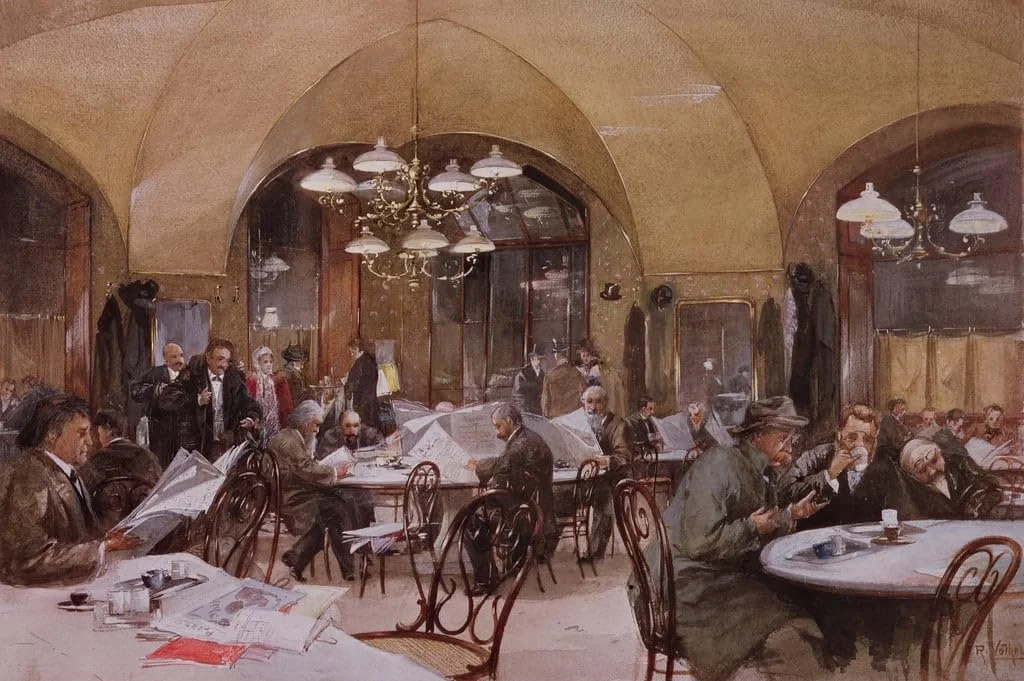
Step 3: Use cafés, shops and offices as your language lab
Real immersion happens when small, everyday interactions stop feeling like tests and start feeling like experiments. Instead of waiting until your Czech is “good enough”, you can prepare simple scripts and use them in low-risk situations.
Start with one typical situation, such as ordering coffee, buying bread, or asking for a receipt. Learn a short script with your teacher – including a greeting, the request, and a polite closing – and repeat it consistently until it feels natural.
Expect the first few attempts to be messy. Many learners find that clerks reply faster or use unexpected phrases; bringing these moments back to your lessons makes them a valuable part of your progress, not a failure.
Extend the script over time: add questions (for example, about types of bread or lunch specials) and practice different levels of formality, so you can adapt to different contexts in Czech society.
We try to simulate these scenarios first – with a focus on real-life language you actually hear at counters and offices – and only then push you to try them in your city. The goal is not perfection but a steady sense of “I can handle this now” in more and more places.
Step 4: Create social contact with Czech that respects your energy
Immersion is not only about talking to strangers. For many professionals and families, time and energy are limited; building a realistic social layer around Czech is more effective than forcing constant conversation.
Look for low-pressure settings such as interest groups, choir rehearsals, or sports clubs where Czech is the default, but participation does not require complex speech. Simply being present and listening already builds context and vocabulary.
Join language exchange communities carefully. When you do, set clear expectations in advance (for example, “20 minutes Czech, 20 minutes English”) to avoid slipping into English-only conversations.
Use small talk at work or in your building. A short, repeated phrase in the elevator or at the reception – even something as simple as “Jak se máte?” or “Hezký víkend” – builds confidence and signals your willingness to use Czech.
Our20 minute lessons are a great way to only focus on trying to get through specific scenarios and get you to engage more iwth small talk and expect what responses and patterns to immerse yourself with.
Step 5: Connect cultural habits with language, not just vocabulary lists
Immersion is also cultural. Many aspects of Czech life – from weekend cottages to direct humour – make more sense when you see how they appear in language, not just in guidebooks.
Explore cultural themes through specific expressions: for example, phrases around “pohoda”, hospitality, or humour. Understanding how Czechs talk about rest, work, or bureaucracy gives you a deeper sense of how people think and relate.
Use seasons and traditions as a framework. Summer festivals, public holidays, or everyday rituals such as Sunday lunch all come with their own vocabulary and set phrases; focusing on one season at a time keeps things concrete and memorable.
Reflect on your own culture in Czech. Comparing how you would talk about home, work, or family in your first language and in Czech reveals where you need new words and where the cultural gaps are.
If you are interested in this side of immersion, our previous article offers a seasonal perspective on language and culture, which you can combine with the practical steps in this article.
Step 6: Use structured lessons to turn immersion into progress
Designed immersion works best when it is linked to a clear study structure. Without that structure, exposure often stays superficial; with it, everyday encounters become “data” that you and your teacher analyse together.
Lessons provide a safe place to test the phrases and patterns you think you have understood, and to correct them before they become habits. This is especially important for grammar areas such as cases, word order and verbs of motion.
A teacher who knows your life context– relocation plans, workplace demands, family situation – can help you choose which immersion tactics to prioritize. That prevents overwhelm and keeps your energy focused on the interactions that matter most to you.
Czech Atelier designs programmes specifically for individuals, groups and companies who want this kind of tailored support. You can read more about Czech lessons for individuals, including how different levels are handled.
Design your own Czech “bubble”
Immersion does not have to be dramatic or exhausting. A few deliberate changes – one device in Czech, one regular media habit, one safe café script, one cultural theme per season – can already shift how you experience everyday life in Czechia. When these steps are combined with structured, online lessons tailored to your situation, they become a sustainable path from classroom to café and beyond.
If you are ready to design a realistic Czech environment around your life, you can book your first lesson or contact Czech Atelier to discuss an individual or company programme that fits your needs.
